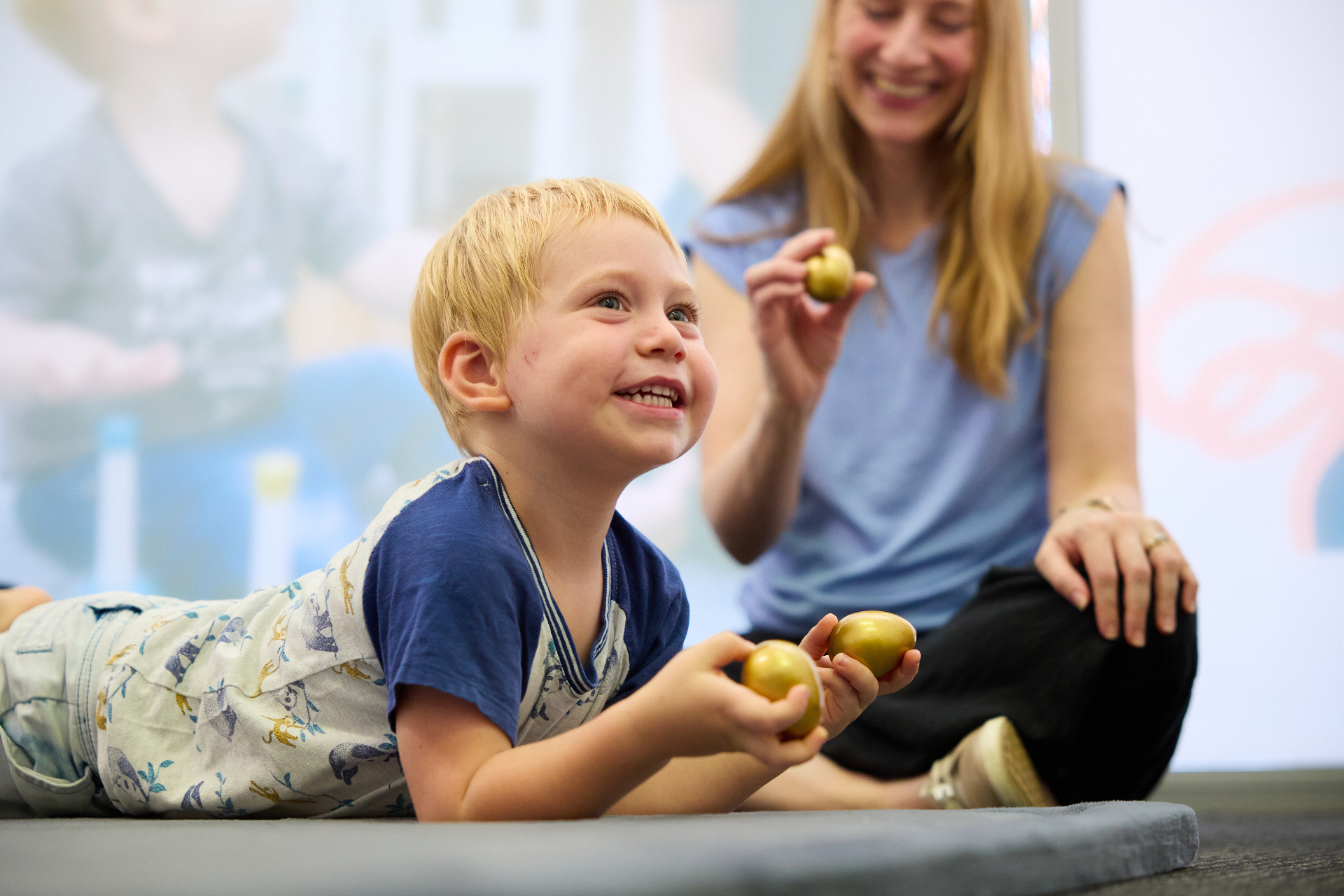
RAMSR is a rhythm and movement program, backed by university research and multiple randomised controlled trials, that supports children's self-regulation in early childhood settings — and gives educators the practical tools to make it happen.
RAMSR is not a theory. It has been tested in real early childhood settings, by regular educators, and shown to produce meaningful results across multiple outcome domains.
Children develop better emotional and attentional self-regulation — the foundation for learning and social participation
Research shows reductions in problem behaviour and improvements in impulse control, inhibition, and group functioning
Children show stronger readiness for school — socially, emotionally, and in terms of executive function skills
RAMSR creates change in early childhood settings — and that matters to everyone involved in a child's early years.
Rooms feel harder to manage and educators are stretched. RAMSR gives your team something credible and practical that actually stays.
Self-regulation, attention, and executive function matter enormously in the early years. RAMSR helps you understand what to look for in your child's centre.
RAMSR is not a separate program that sits alongside what you already do. It is a set of rhythm and movement strategies that fold into transitions, group times, and daily routines — from day one.
A tailored in-centre training day. No music background required. Practical strategies educators can use the next day.
RAMSR is built into existing routines — transitions, arrivals, group times — using ready-to-use session plans and audio resources.
A consistent, evidence-backed approach develops across rooms. Children experience reliable co-regulation support every day.
Whether you lead a centre or care for a child, there is a clear next step from here.
Tell us about your centre, the challenges you're facing, and we'll be in touch with everything you need to know.
Enquire NowA free, practical guide to understanding what regulation support looks like in early childhood settings — and what to ask your centre.
Download free checklist